
Access Expert-level public speaking coaching for free
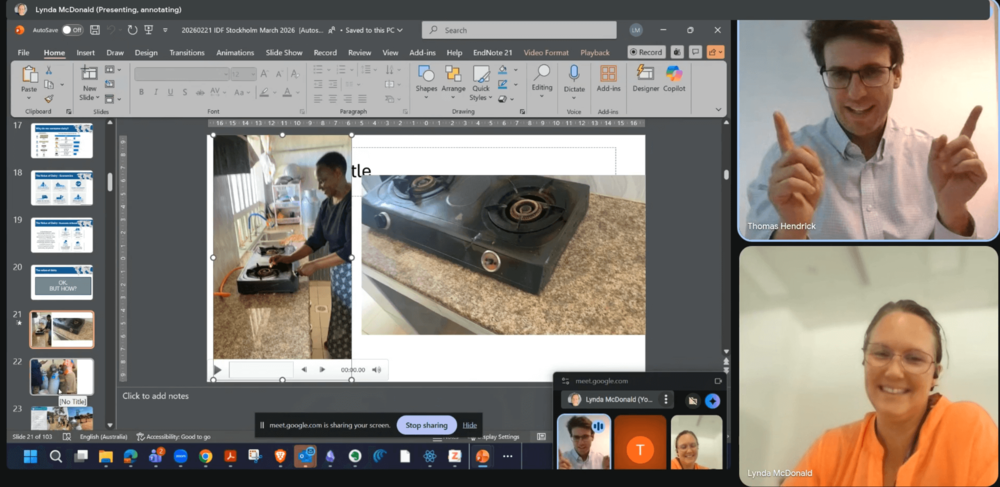
Tom coaching Lynda (PhD) on her keynote presentation to the international dairy industry in Sweden.
The First Session: 5 things I measure in a Speaker Assessment and why
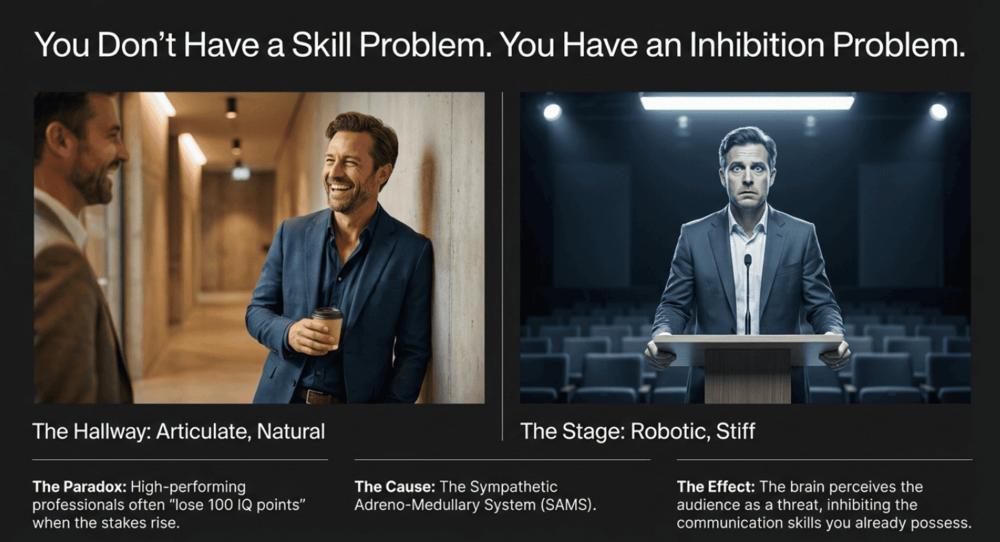
When highly intelligent professionals—such as executives, PhD researchers, or medical doctors—struggle with public speaking, the standard advice is usually to "just practice more" or "imagine the audience in their underwear." At Tom Hendrick Public Speaking, we know that generic advice does not work for high-stakes environments.
Most professionals do not have a "skill acquisition" problem; they suffer from a "skill inhibition" problem where pressure blocks their natural abilities.
Instead of guessing what is holding a speaker back, we take a data-driven, biological, and psychological approach.
To effectively un-inhibit a speaker, we must first diagnose exactly how their brain and body respond to pressure. Here are the 5 specific things we measure in a client’s comprehensive speaker assessment.
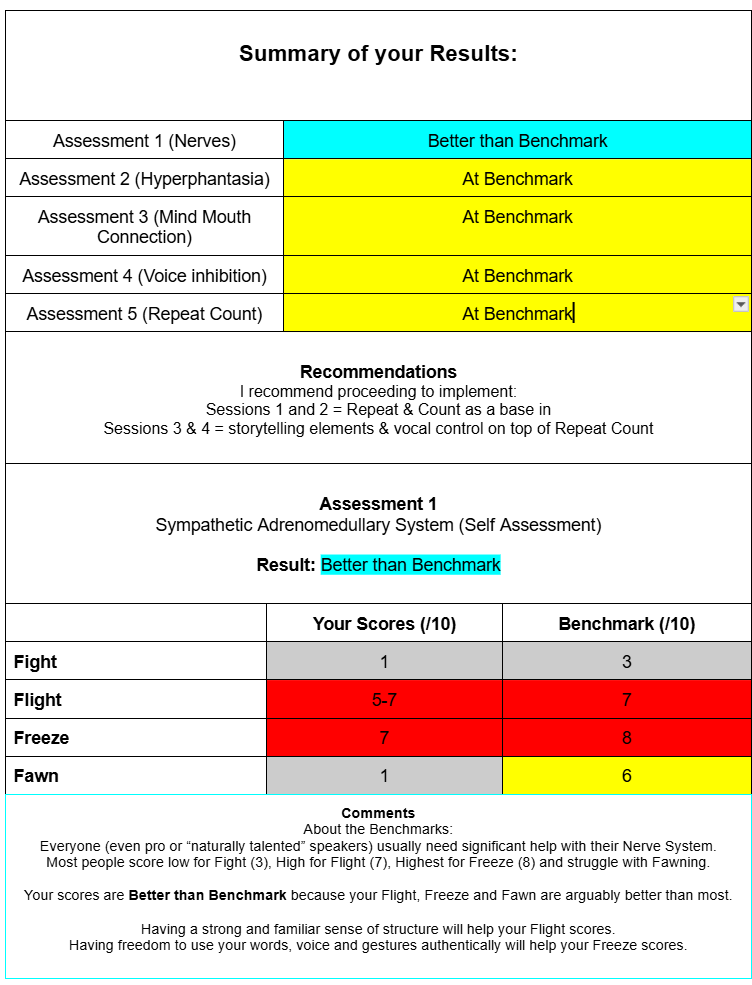
A screenshot of a Speaker Assessment from a recent client, showing that they mostly scored “at benchmark” compared to the population average but still have negative effects that noticeably inhibits performance.
Test 1 of 5: Nerves under pressure self assessment
The first thing we assess is your involuntary physical and mental reaction to a formalized, high-stakes environment. When you perceive a threat to your reputation, your amygdala triggers the sympathetic adreno-medullary system. This floods your body with hormones that inhibit your presenting performance.
Through our targeted survey, we measure how this nerve inhibition manifests in your specific speaking style. We like to use 4 familiar categories to help people verbalize what they are feeling:
“Fight” - Do you get over-energized, speak too fast, ramble, or become overly combative with the audience?
“Flight” - Before you speak, do you easily catastrophize your presentation going wrong, get stressed during preparation, or over-prepare?
“Freeze” - What physical feelings do you get when presenting? Do you go completely blank, tense up, or hesitate and miss your opportunity to speak?
“Fawn” - Do you get fearful or uncomfortable giving bad news? Abandoning your core message to people-please, telling the audience what they want to hear rather than what they need to hear?
We score each of these categories from 1 to 10.
A 5 or less would be “some noticeable negative effects, but manageable”.
An 8 would be “negative effects that noticeably reduce performance“.
A 10 would be “negative effects cause the speaker to fail (can’t speak)“.
Test 2 of 5: Aphantasia to Hyperphantasia spectrum
This test involves me vividly describing an apple growing, moving and transforming. The point is for the client to try and visualize all those instructions happening to the apple.
I then ask the client what they saw and if it was difficult. Depending where on the spectrum they are is highly correlative to their abilities to speak fluently while either relying on image prompts or category prompts. Image prompt communication is when you have to talk for an extended period about cats from (say) a photo of a cat. An example of a category prompt would be “describe big and small cats“.
This, and the other tests, give me an idea of how much the client may struggle to speak without a script.
“Aphantasia” - Client cannot generate an image in their mind. Highly likely such clients overcompensate by being fluent at speaking from category prompts.
“Hypophantasia” - Client strains to generate an image in their mind. Highly likely such clients prefer category prompts but can speak from image prompts with difficulty.
“Phantasia” - Client generates image easily as instructed. Often means the speaker will not be naturally gifted at speaking from either image or category prompts but can easily learn either.
“Hyperphantasia” - Client not only easily generates image, but has an involuntary tendancy to continue image generation from instructions (e.g. might see a worm in the apple that I didn’t describe). Highly likely speaking from category prompts will be difficult or not preferred.
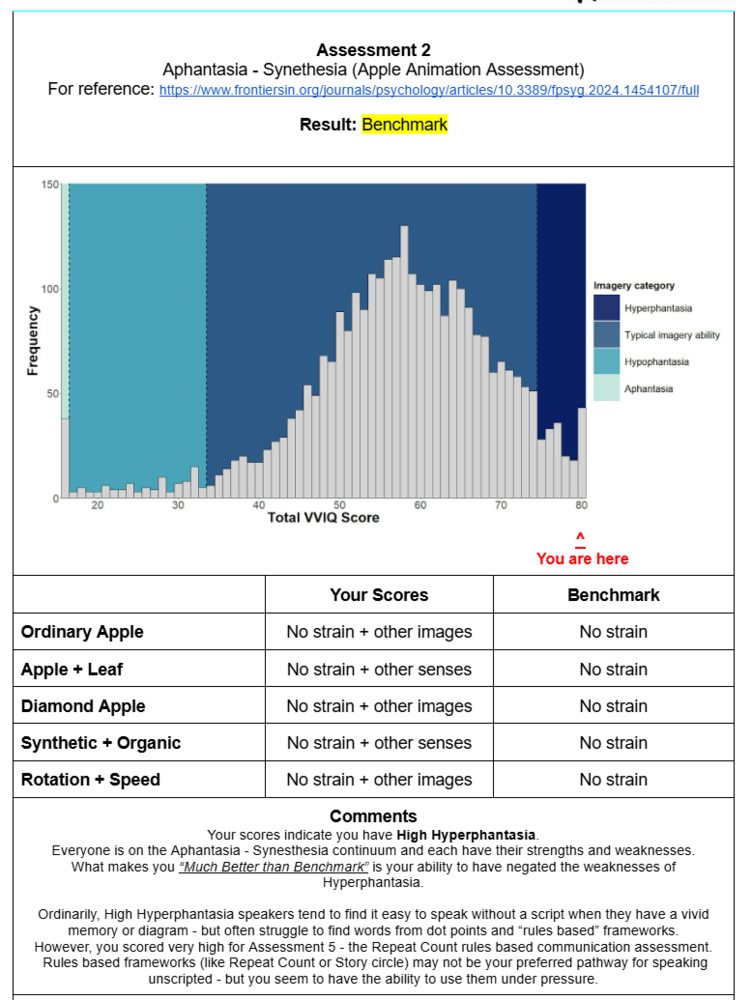
On the Apple Aphantasia Hyperphantasia test, this client claimed to see much more than what I instructed her to visualize. This was subsequently confirmed in the latter Mind Mouth connection test and her low results in the Repeat Count (category prompt) test.
Test 3 of 5: Mind Mouth Connection (image prompting)
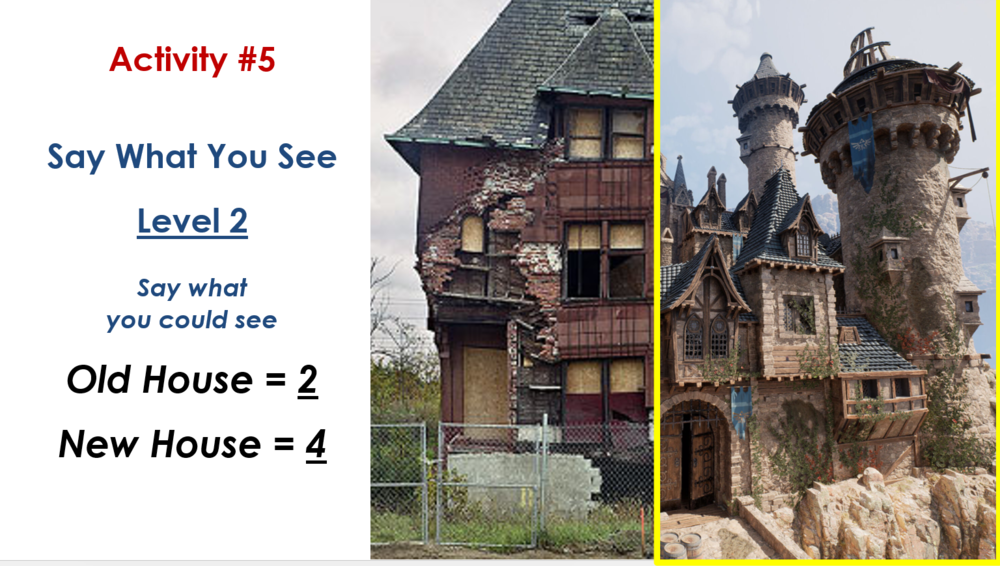
The example image below is used for the image and sound prompting test (or Mind Mouth Connection test). I call it the Mind Mouth Connection because it is about how fluent speakers are at looking at images they know the words for, but getting those words out of their mouth.
Clients have to speak for extended periods of time about only what they can literally see while maintaining faster and slower rates of speaking. This tests how much fluency is lost under pressure during an image prompt with the added pressure of time and using your voice.
People with Phantasia have little to no issue with this test. People with Hyperphantasia tend to struggle to comply with the instruction to only describe that which can literally be seen. People with Hypo-phantasia and Aphantasia often show a lot of strain, particularly when the voice is required to speak faster.
Allowances need to be made for people where English is a secondary language. Even when they are proficient in English, there is an increased mental burden on translating from sight to a primary language to a secondary language.
Test 4 of 5: Sound Change Inhibition Test
Probably my favourite test.
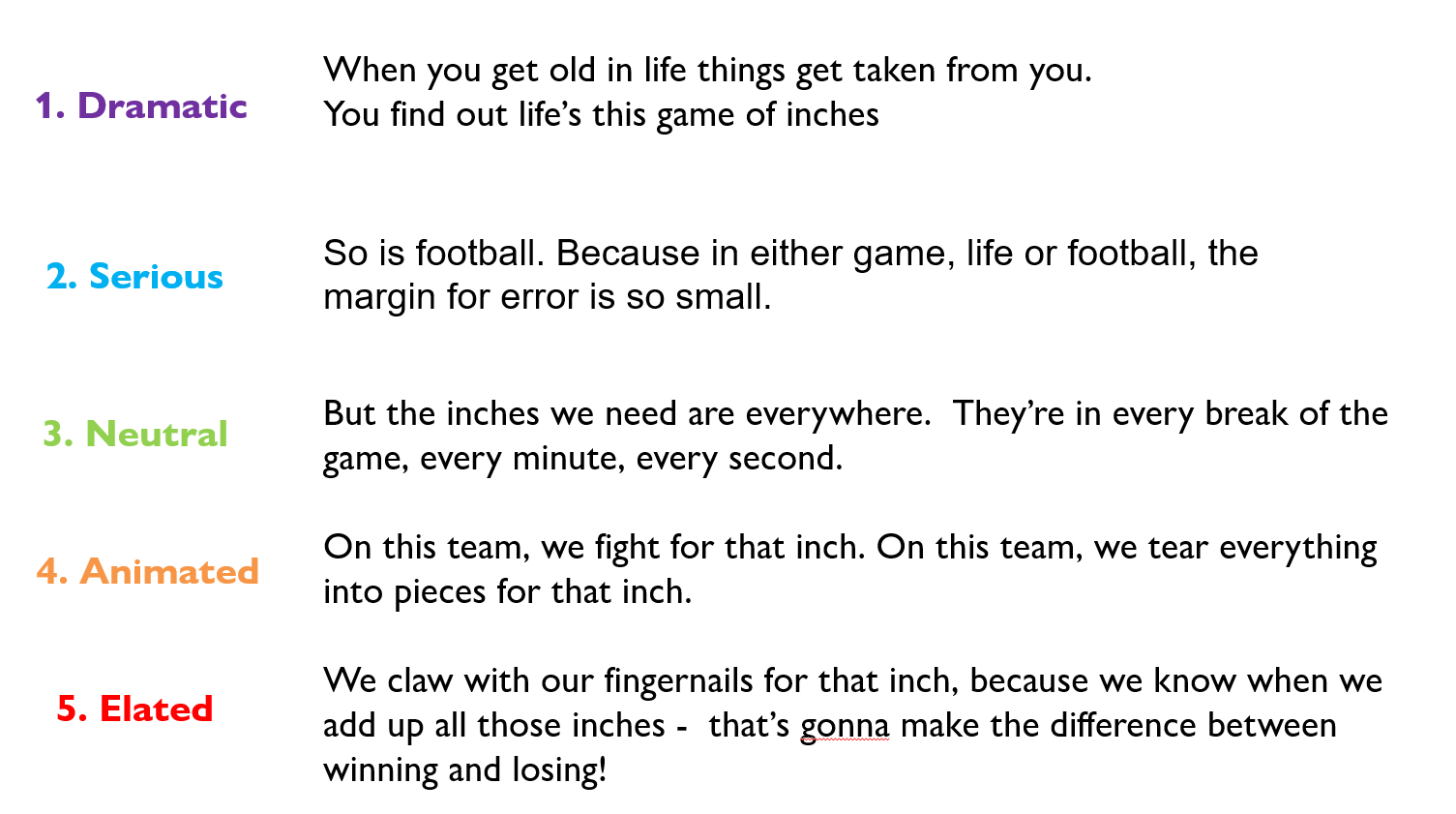
I provide clients with a script that contains instructions prompting them to continually increase the intensity of their voice from start to finish.
I provide the Clients with a demonstration before they try so they completely understand what to do and how much I want them to vary the intensity of their delivery through increased pitch, pace, pause, volume and tone.
The vast majority of clients can only achieve 2 out of the 5 intensities, which indicates that most people are very vocally inhibited. In other words, the sympathetic adreno-medullary system does not allow most speakers to access anywhere near the full extent of their vocal variation.
This might explain why most people are very monotone and uncomfortable presenting in public, but have variable and personable voices privately.
Test 5 of 5: Repeat Count Test (category prompting)
This is the longest and most telling of all the tests.
It is a 5 step test, with 5 questions per step, that gets increasingly difficult each question. It tests how well people can formulate words that fit a rule or category.
First, I get clients to ask me a list of practice questions to demonstrate the skill being tested, so the client know how to perform the skill correctly.
Level 1 - Repeat a selected word only. I ask a questions with an underlined word. Participants just have to say the underlined word. Believe it or not, most people with Hyperphantasia fail this test even after a demonstration.
Level 2 - I ask questions and the client has to choose a word from that question themselves and say only that word. I ask clients to say it quickly, confidently, and with some natural voicing that implies “interesting question”.
Level 3 - I ask questions and the client has to repeat the whole question while making slight grammar adjustments (e.g. Would you invest in a bakery? = Would I invest in a bakery?)
Level 4 - I ask questions and the client has to use words in that question to make a statement (not a question). For example, “would you invest in a bakery“ = “I might invest in a bakery…“. Believe it or not, almost everyone fails this level completely except for people with Aphantasia and Hypophantasia - who often say “this is so easy” (a sign of their overcompensating category prompting due to lack of image prompting).
Level 5 - I ask questions and the client has to clarify that question into 2x opposite parts. For example “would you invest in a bakery“ = “do you mean a small bakery or a big bakery?“.
What happens when you put all the skills together?
My “party trick” is I get clients to pick a random question generated by AI and I answer it with no prior preparation, utilising visually descriptive words (image prompting), sound change, and Repeat Count structures.
I also challenge clients to ask me a question I couldn’t possibly know the answer to (this is very challenging when working with PhDs) and I have yet to be stumped on a question I could not clarify and structure a clear, engaging and insightful response.
This demonstrates an advanced effortless state, promised by the Fitts & Posner Model of skill acquisition.
When the inhibitions to communication are reduced, effortful attention to the skill of communication becomes very low, and multiple public speaking skills can be done simultaneously to a high level of performance.
Below is a video of me demonstrating a completely randomized challenge to demonstrate the idea of stacking multiple skills simultaneously.
Start from 36min to 39min.