THPS Coaching Plan
The Strategic Roadmap for Performance Acquisition
A THPS Coaching Plan is a customized, multi-phase developmental roadmap designed to transition a speaker from Skill Inhibition to Autonomous Mastery. Unlike traditional coaching, which often focuses on surface-level aesthetics (gestures and eye contact), the THPS (Training Hub for Public Speaking) plan addresses the neurological bottlenecks identified during the initial THPS Diagnostic.
The Architecture of the Plan
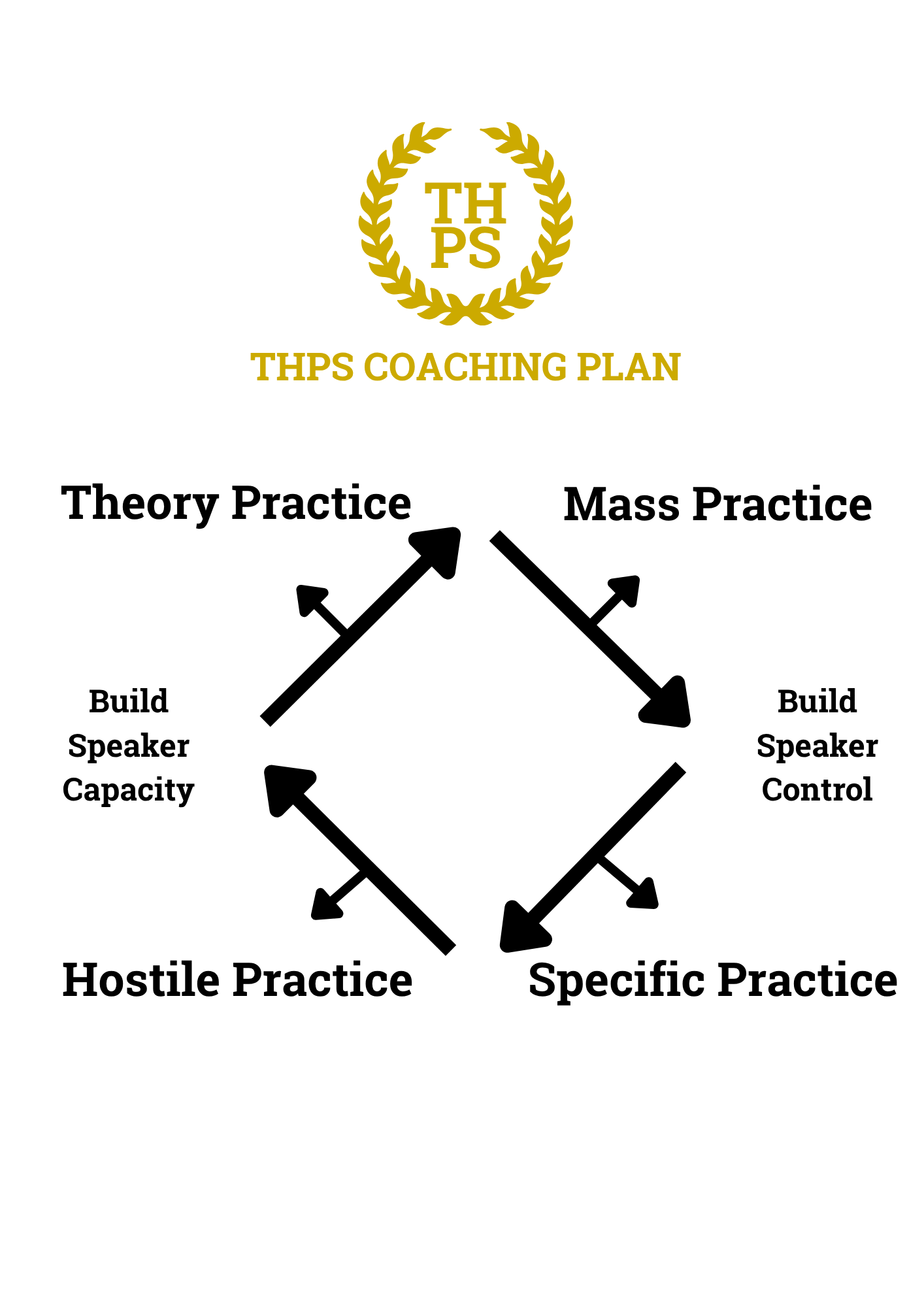
A standard THPS Coaching Plan is structured into four distinct phases of skill acquisition using modern principles of deliberate practice that have expanded from Fitts & Posner 1967. We see these modern approaches to training applied in Olympic athletes, physiotherapy and rehabilitation, and language learning:
Theory Practice
Theory Practice is the first training phase. It is about building a speakers knowledge capacity for the choices available to them when presenting, how to detect when they are done right or wrong, and which one to choose for different audiences and situations.
Theory Practice looks like the frequent use of Quizzes and “spot the mistake” video training. Building a foundation of knowledge is essential for students to “self-correct” their performance and progress in the Mass Practice phase.
Mass Practice
Mass Practice is the second training phase and is about improving the Speaker’s control and self-correction. Speakers are ready for Mass Practice when they show signs of being able to recall the Theory. Mass Practice is about providing an isolated and simple series of short exercises so the Speaker is exposed to lots of attempts to apply their emerging “self-correction” skills. By making lots of mistakes, and self-correcting them, eventually the speaker’s Attentional Capacity for the skill improves and the skills becomes more effortless and automatic.
Mas Practice looks like lots of short speaking exercises, like describing a picture (Say What You See) while modulating their voice (Sound Change).
Specific Practice
Specific Practice is the third training phase and is about refining the Speaker’s control and self-correction in real-world scenarios. Speakers are ready for Specific Practice when they show signs of being able to self-correct correctly in Mass Practice. They should be putting their words into patterns like Small-Big, Familiar-Unfamiliar or Personal Tangible Intangible without too much strain.
Specific Practice makes the Speaker “match fit” and able to self-correct with such little delay that they eventually achieve the “effortless” or autonomous phase of skill acquisition.
Specific Practice looks like simulating the speaking challenges of the real world such as Q&A and performing presentations from start to finish.
Hostile Practice
Hostile Practice happens is the fourth training phase and is about building the Speaker’s capacity to handle more difficult (Hostile) situations. Hostile Practice is about making the speakers able to keep their advanced skills when their SAM System is hit with extreme cognitive load such as when technology fails or they receive adverse questions from the audience.
Speakers are ready for Hostile Practice when they make little to no mistakes during Specific Practice. This is a sign that the Speaker is deep into the Effortless phase of skill acquisition.
Hostile Practice looks like interrupting the speaker, distracting the speaker, reframing their points unfavourably (Straw-manning) or putting their character into question (Ad Hominem Attack).
Conclusion
The THPS Coaching Plan serves as the "SOP" (Standard Operating Procedure) for building a Speaker’s skill capacity and control in increasingly realistic and difficult speaking scenarios.
This concept is one of many core concepts under the THPS Glossary and THPS Standard for elite-level public speaking skills and training.