
The Tom Hendrick Model of Skill Acquisition, Training Methods and Coaching Plan
Public Speaking Skills Before Training with Tom Hendrick
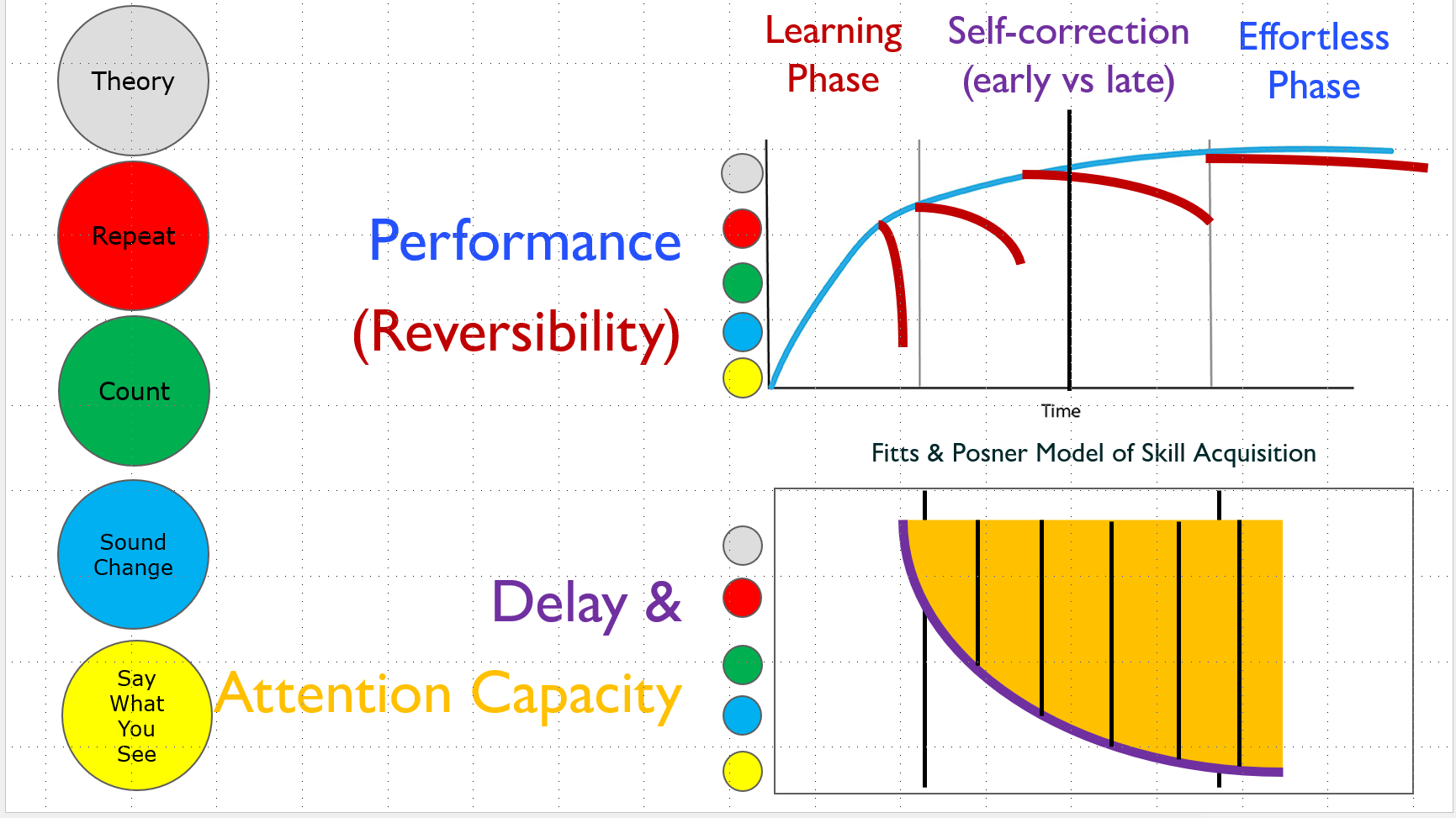
This is the step-by-step training method for acquiring all the Tom Hendrick public speaking skills in the Audience-centric Framework.
Let’s say you want to get very good at answering questions confidently, with clear structure, while effortlessly using your voice and body naturally, with no nervousness or hesitation.
This is how we will do it…
Look at the Top Graph
The Blue Curve is going up, which shows that your ability to perform public speaking skills is getting better and better.
The Red Lines go down fast in the Learning Phase, slower in the Self-correction Phase, and hardly go down at all in the Effortless Phase. This shows how you lose knowledge and performance very quickly when you start learning a skill. However, you essentially acquire skills foreveronce they are mastered or Effortless.
The Coloured Circles represent different public speaking skills. If you haven’t done any training, you won’t have progressed any of these skills up the Skill Acquisition Curve.
Now Look at the Bottom Graph
The Purple Curve is almost infinitely high at the start, but quickly goes down over time. This shows delay, or how long it takes you to notice if you’ve done a skill right or wrong. When you’re starting a new skill, you have no concept of what makes it right or wrong, so it takes “infinite” time to figure that out. However, the more you practice it takes you less and less time to notice errors.
The Orange Spaceshows your attention capacity. When you’re learning new things, your brain has to strain to remember how that new thing works. This has a heavy “cognitive load” which makes you incapable of noticing other things when you’re calculating new knowledge. But in public speaking, the more you practice the more you can perform skills effortlessly and have attention capacity to spare on other things.
For example, a basketballer can dribble the ball in advanced ways, without looking at the ball, but instead spending their attention on their players while avoiding opponents. They are doing multiple advanced skills, to a high level of performance, simultaneously, with attention capacity to spare.
Public Speaking Skills After Training with Tom Hendrick
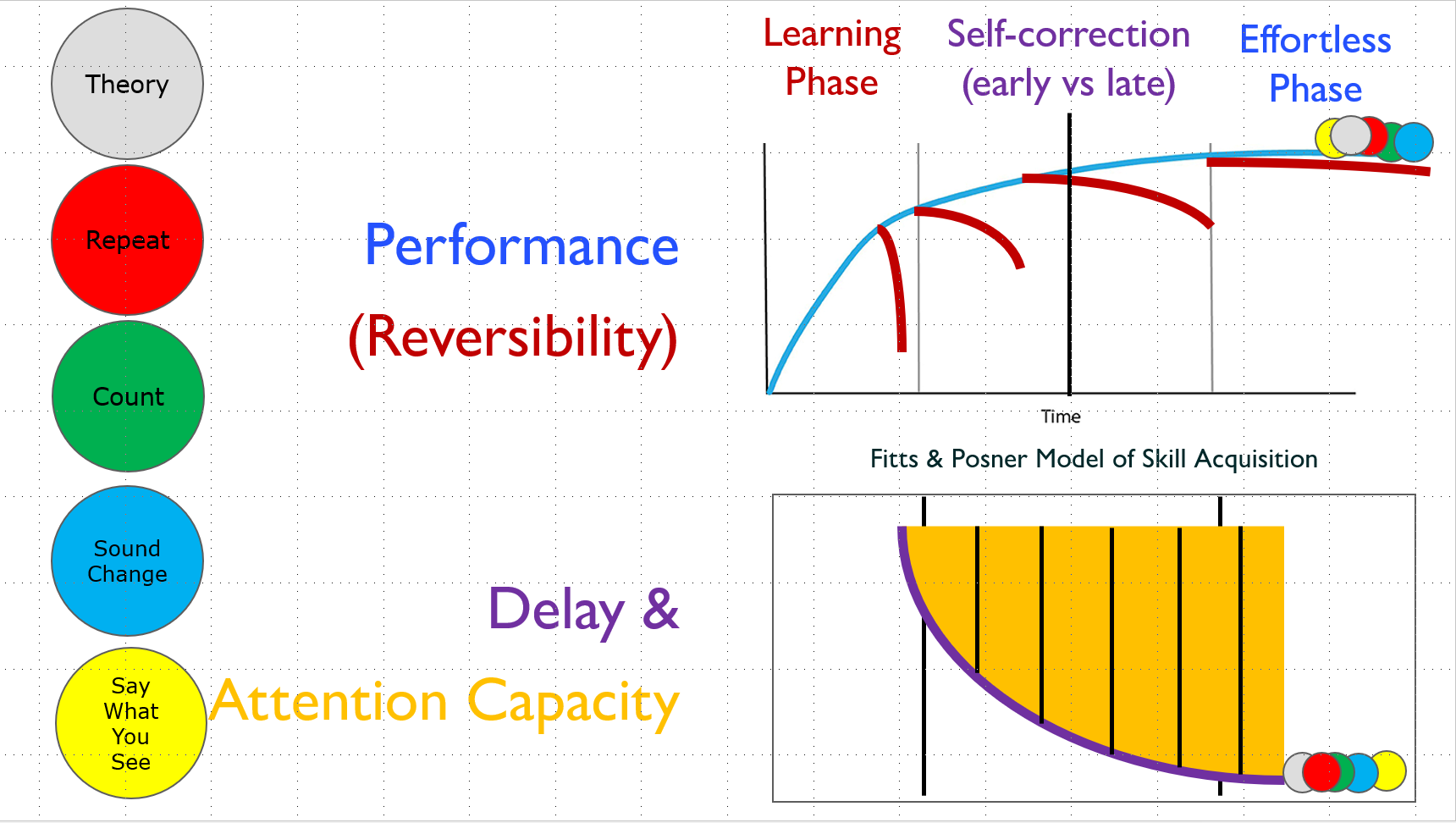
These graphs now represent what your speaking skills will look like after you’ve done some training with Tom Hendrick.
Look at the Top Graph
All of the speaking skills have progressed along the Blue Curve. You now have deep understanding of public speaking concepts (grey, Theory), you can easily access the right words in your intelligence (red, Repeat), you can structure your thoughts into advanced story or explanation structures (green, Count), you have complete natural mastery over your voice (blue, Sound Change), and you can combine words to create vivid images or stories to explain things easily and engagingly (yellow, Say What You See).
Look at the Bottom Graph
You can summon each of those 5 skills without thinking too hard. In the same way it feels weird to hold a pen incorrectly, it now feels weird not to use advanced speaking concepts correctly. These skills come out fast, without hesitation, because they are established habits now. That means you have a huge attention capacity to be present when you speak, noting subtle details like the audience’s reactions to your performance. You spot someone enjoying your explanation, so in real time you flesh out the story even more and come up with a more brilliant ending for that specific audience in that very moment.
You are now a far better speaker without a script, than with a script.
Public Speaking Skills after Theory Practice
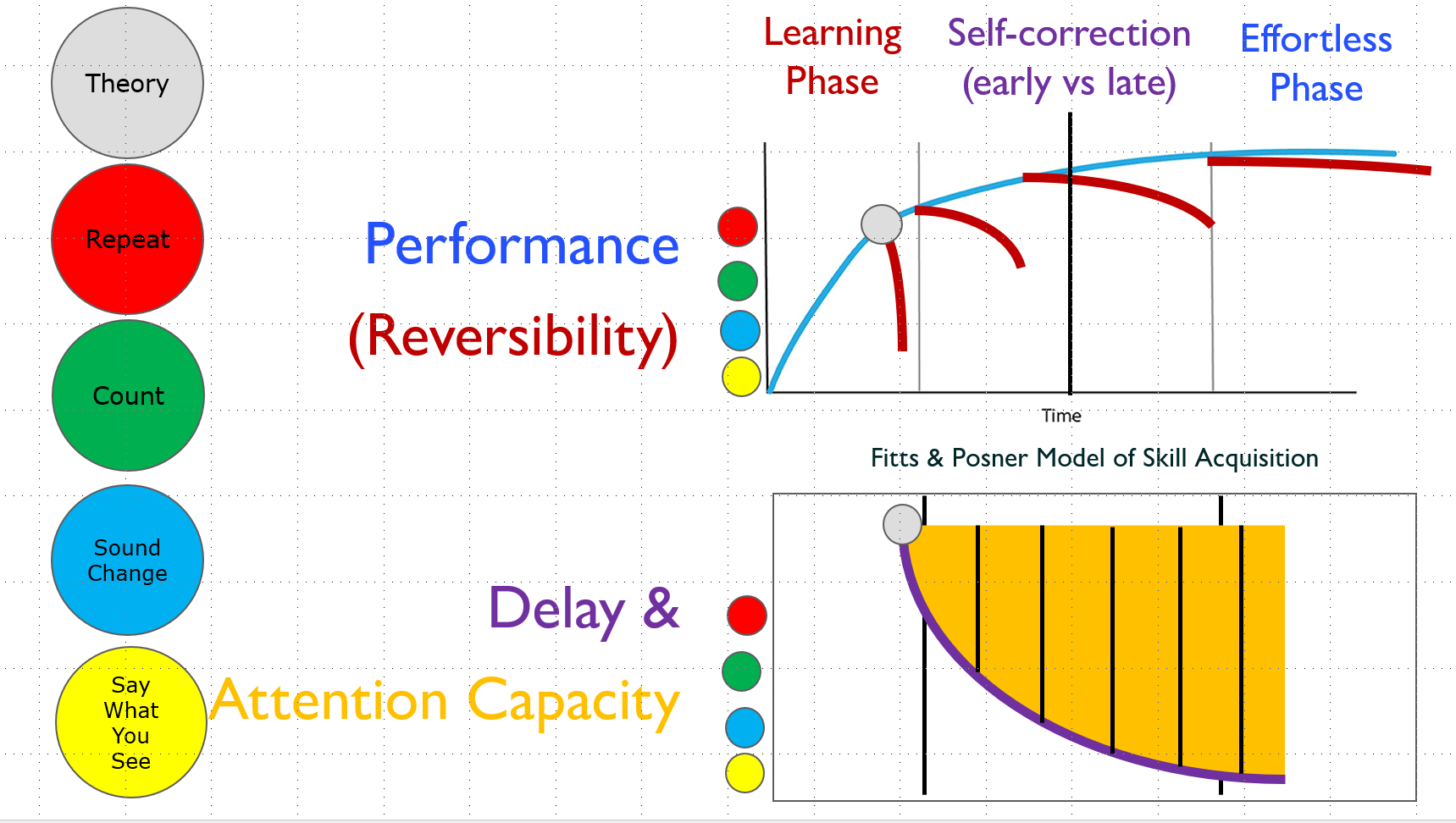
We would start with Theory Practice under the Repeat & Count course.
Before you event start any of the quizzes or “spot the skill” exercises, you will have no understanding whatsoever about Repeat & Count, what it is, when it is does wrong or right, or why we use Repeat & Count.
Look at the Top Graph. The “grey” theory skill would be at the bottom left (no performance, and you’ve spent no time practicing).
If you only did 30mins of passive reading and watching Theory Practice, your grey Theory skill has progressed significantly! Suddenly you’ve learnt a lot about the concepts of “Repeat”, “Count”, “self-regulation”, “co-regulation” and “word association”. You might get 10 out of 10 on a quiz! And you can see when Repeat & Count is done well and not so well.
You then go to sleep and try again a week later. Suddenly, you forget things. You only get 2 out of 10 on the quiz. This drop in performance in a short space of time is shown by the red reversibility lines. In the Learning Phase, performance is low (you can’t ride a bike well after reading how to ride a bike) and skills / knowledge comes and goes quickly.
Look at the Top Graph again . Your grey theory skill just went from the bottom, to the top of the learning curve - but the red line shows your knowledge is at risk of quickly going to the bottom of the learning curve again.
Now look at the Bottom Graph (orange and purple). This shows that answering these basic questions about Repeat & Count takes a lot of mental strain (cognitive load). You have to think really hard and it’s all you can focus on. it takes you a long time to come up with an answer you’re not very confident about.
How do we progress from here?
Here’s the good news! It won’t take you 30 mins to learn everything you lost again. It will take about 1 minute to regain your knowledge if you did the exercises yesterday, about 5 minutes if you did the Theory Practice week ago, and about 15 minutes if you did it 2 or more weeks ago. Reversibility is steep in the early stages of skill acquisition. But Reversibility is less severe as you climb up the skill acquisition curve.
That’s why you can’t just watch and read about public speaking, you have to do exercises and self-correct your performance.
That’s why we provide "quizzes”, “spot the skill” exercises, and an AI Chatbot to help you self-correct. This turns learning from passive to active. Specifically, quizzes and spot the skill exercises are a form of “mass practice”.
Public Speaking Skills after Mass Practice
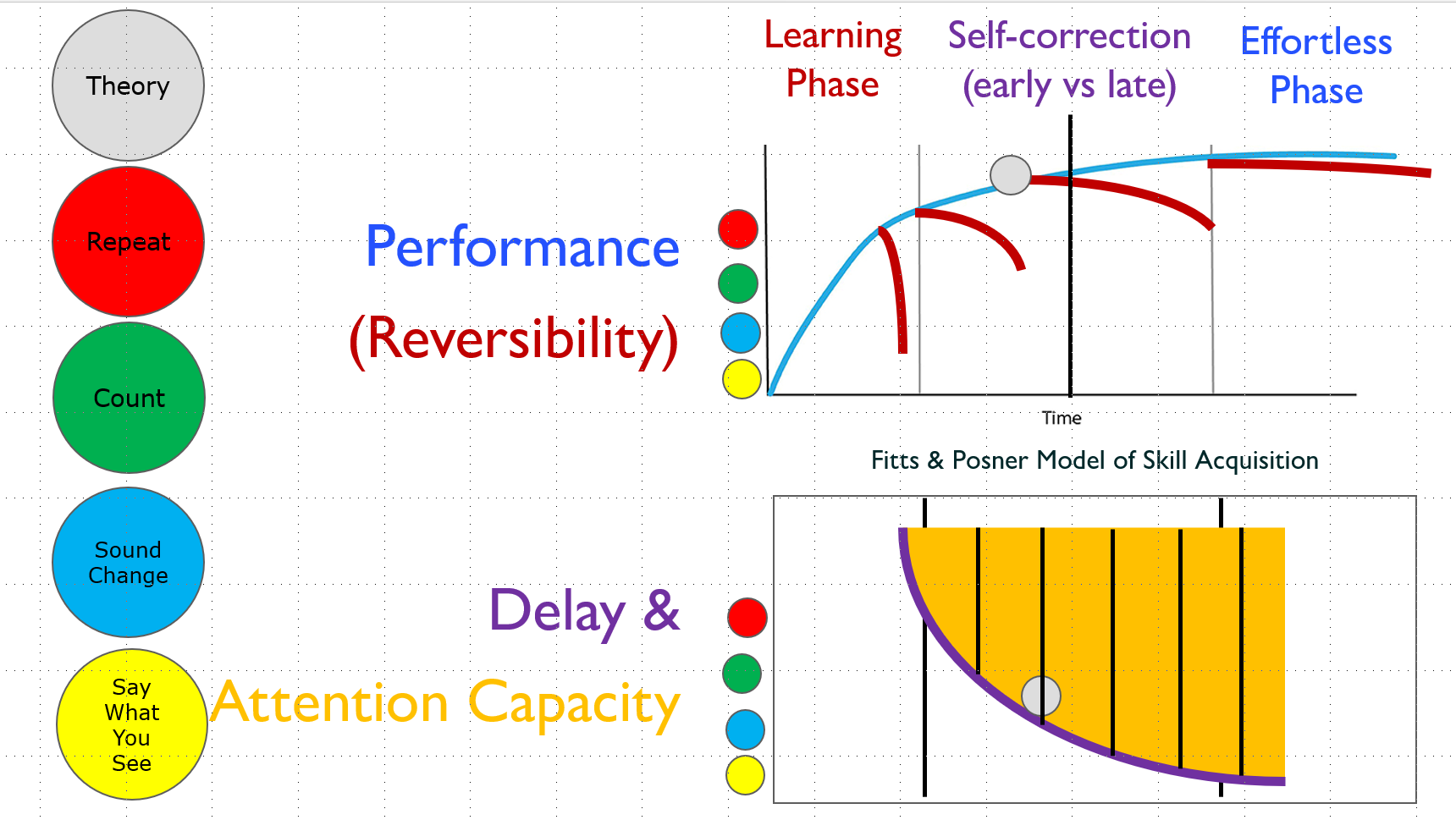
Instead of just reading or watching, you have now done multiple quizzes, multiple spot the skill exercises, and you have received lots of AI Chatbot Feedback.
You’ve done similar things over and over again for about 30mins now, it’s almost getting boring if it wasn’t so rewarding to feel overwhelming rapid improvement.
That’s the feeling of approaching effortless. You’ve quickly gone from no idea, to capable.
You still make mistakes but you get better and better every attempt.
You notice it still feels hard, but it doesn’t take as much mental strain anymore. Let’s break that down.
Look at the Top Graph
The grey theory skill is higher up the performance curve. You have a deeper understanding of public speaking concepts. Furthermore, if you didn’t practice for a week, you wouldn’t forget as much as you did when you were still in the Learning Phase.
But you are still in the early self-correction phase. This means that you’re still relying on the quiz, a recording, or a coach to fix or correct your errors.
However, you are developing “intrinsic feedback”. Intrinsic feedback is your ability to notice what is wrong or right about your own performance.
Once you can say things like “that’s not quite right”, “instead of this, I should have done that”, or “the second example is better than the first because…”. That’s when you’re ready for Specific Practice.
Look at the Bottom Graph
Because you have done so many repetitions of quizzes, spot the skill exercises, etc… your delay has gone from infinite to barely over a second delay. That’s a huge leap but there’s still a long way to go to get “instantaneous”.
You now feel like you’re in a rhythm because you have some (not much) attention to spare when performing the speaking skill.
Public Speaking Skills after Specific Practice
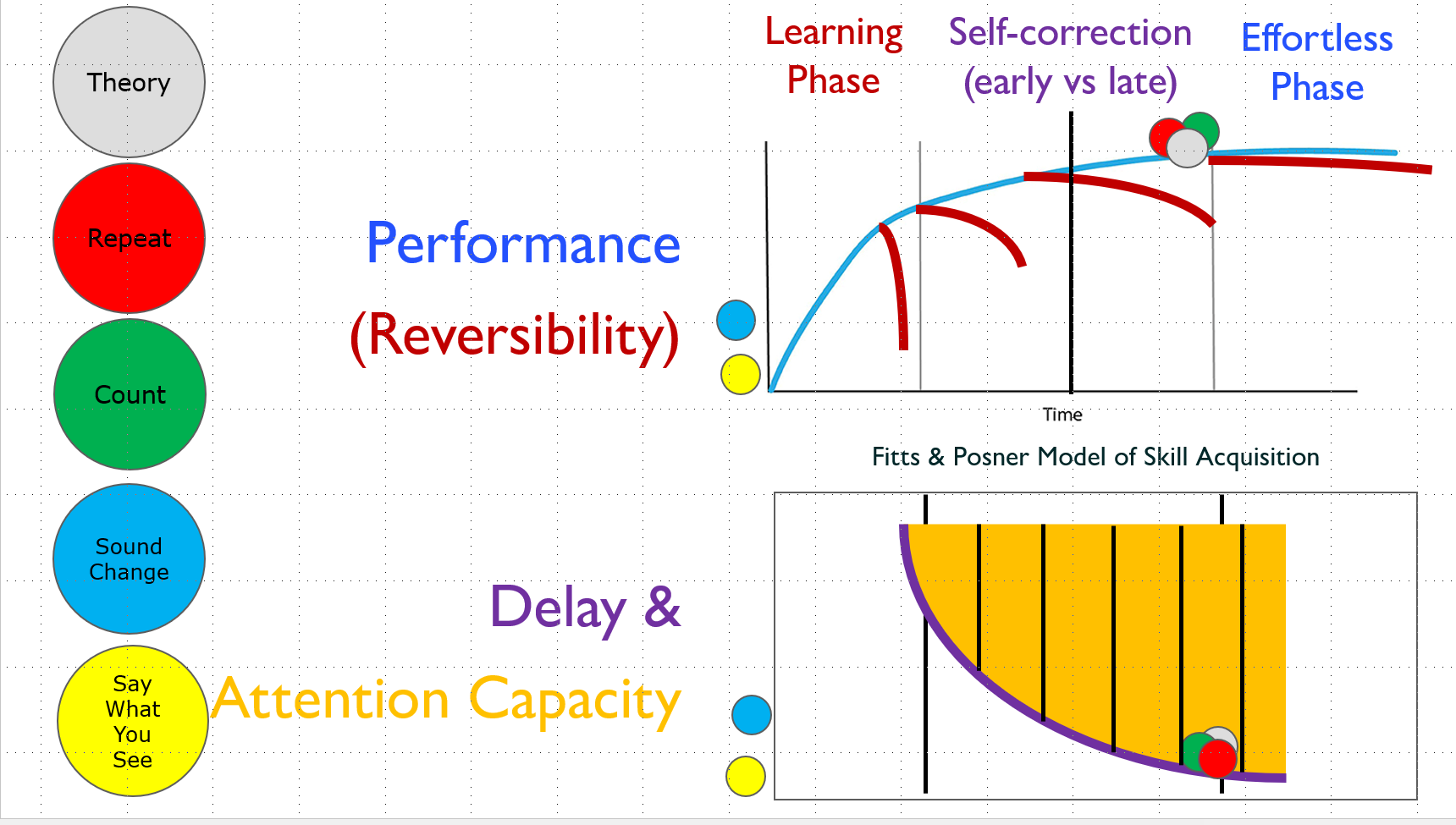
The graphs are examples of where clients get to after Specific Practice. It is also an example of Combine Practice, because we have practiced performing multiple skills simultaneously.
After 2 hours of mass practice, you have done Theory Quizzes, Spot the Skill exercises, but also lots of spoken answers to practice questions using the Repeat & Count skills.
Your theory knowledge has deepened as you have learnt some advanced nuances about how best to Repeat & Count and what not to do.
Not only have we done playful and isolated exercises, but we are now starting to put these skills into real world scenarios.
Look at the Top Graph
After repeating Theory and Mass practice for 2 other skills (Repeat and Count), we now are able to perform 3 skills almost effortlessly after about 2 hours of total practice (typically done in 1 hour sessions once a week).
We start Specific Practice when the cross the line from the early self-correction phase to the late self-correction phase. The late self-correction phase is when my clients show signs of “intrinsic feedback” - namely they can quickly spot when they have made a mistake in their own performance. Now to progress into the effortless phase, we want that mistake spotting skill to get faster and faster (indicated by the bottom graph).
Specific Practice for Repeat & Count looks like generating a few images related to their job and asking questions inspired by those images. For example, for a client that works in a pharmacy I might have an image of a lab and ask questions like: “are medicines getting better?“, “what’s the hardest thing about being a pharmacist?“, etc.
When clients were are the bottom of the skill curve 2 sessions ago, these were the kinds of questions they should have been able to answer elegantly - but they would ramble, go blank, or get uncomfortable nervous feelings. When they reach this stage of the Top Graph, they will provide very clear and effortless structured answers - even surprising themselves with nuanced insights that emerge from the pattern-based Count structures.
Look at the Bottom Graph
There are 3 skills that are being performed simultaneously, and there is still a huge budget of attention span to spend on more skills.
When clients reach this stage, this is what their brain would be doing at high speeds (less than 1 second) if we plugged them into a “thought to text” machine:
“Repeat (question): are medicines getting better?“ … hard question, clarify for more word association, self-regulation and co-regulation … Repeat Count (clarify: person v non-person): “better for patients or better for producers?“ … Word Association: patients: more options, brand + off brand is affordable … producers: innovation better product market niching, curing more things in different ways, more profit, but high research barriers to entry so concentrated in big players.” [This transcript was taken from a recent client post session interview, and is typical of every client’s experience with the Repeat Count Training Plan]
As you can see, being able to process information through Theory, Repeat and Count skills proficiently is causing the client to tap into their intelligence to not only answer the question, but quickly gather different options to answer the question and choose the best options.
To progress even further, they need to give better answers, to harder questions, under more pressure. And that’s where Hostile Practice Starts.
Public Speaking Skills after Hostile Practice
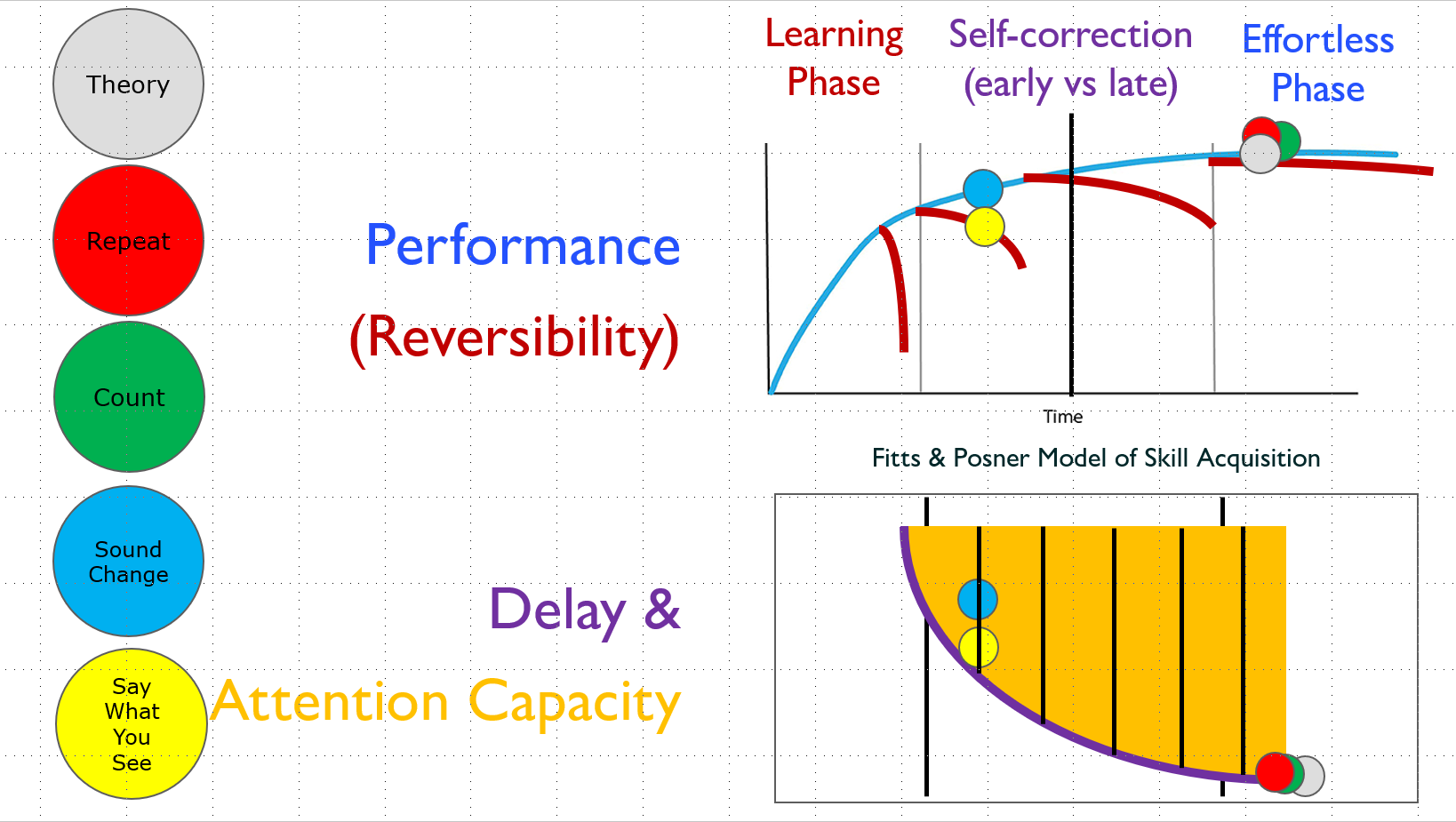
Hostile Practice is where we turn up the pressure more and more as follows:
Constraints: Constraints might include giving you less time to speak, or forbidding you from saying certain words. This puts higher demand on your Attention Capacity and Word Association and makes the skills much harder and more distracting to perform. Nervousness signs tend to re-appear until the client becomes familiar and proficient with those constraints.
Distractions: Interruptions to your focus using sudden movements and sounds puts higher demand on your Attention Capacity and Word Association. This could be throwing a ball at the speaker, or having my phone start ringing, making faces, or looking like I want to say something. This can dial up the pressure and cause the client to become increasingly nervous or strained.
Personal Attacks (Ad Hominem): Being cautious not to do anything unethical, another way of increasing pressure and difficulty is to frame questions so they attack the client directly. Here are some examples from easy to hard: “Why did you choose this job?“, “There are a lot of bad people in your line of work, why did you choose to follow?“, “Recently a person was hospitalized because of your organisation, how do you sleep at night?“. Attacks place higher demands on clients to regulate any feelings of anger or hurt, and to be very cautious and selective on how they respond. They need to lean into Repeat & Count more to get further benefits of self-regulation, co-regulation and word association.
Strawman Attacks: Strawman Attacks are when you Repeat a client’s answer but in unfair and mis-representative terms. For example if the client said “Yes our pharmacy company makes profit when people get sick, but we reinvest in research to cure more illnesses“ a Strawman Attack might be “So you’re saying there are good guys (researchers) and bad guys (profiters) in your industry?“. Again, this places a high demand on the client’s need to self-regulate, co-regulate, and word associate - as these kinds of questions can feel like walking a tightrope… one “um” or wrong word and you feel like you’re losing the argument.
If you look at the Top Graph and Bottom Graph
In all the above examples, the client needed to have access to faster and deeper theory, Repeat skills, and Count skills. However, they now could benefit from other communication skills to combat these hyper-realistic hostile scenarios (Say What You See and Sound Change). This will let them be in full control of their nerves, thoughts, words, as well as voice and increase engagement from their explanations and stories.
Combine Practice is about incorporating multiple skills during Specific Practice and Hostile Practice. Here, the difficultly of the hostile questions reveals 2 things: firstly, the client needs both more skill tools to do better at harder questions, and secondly they have the attention budget to incorporate more skills.
Public Speaking Skills after Combine Practice
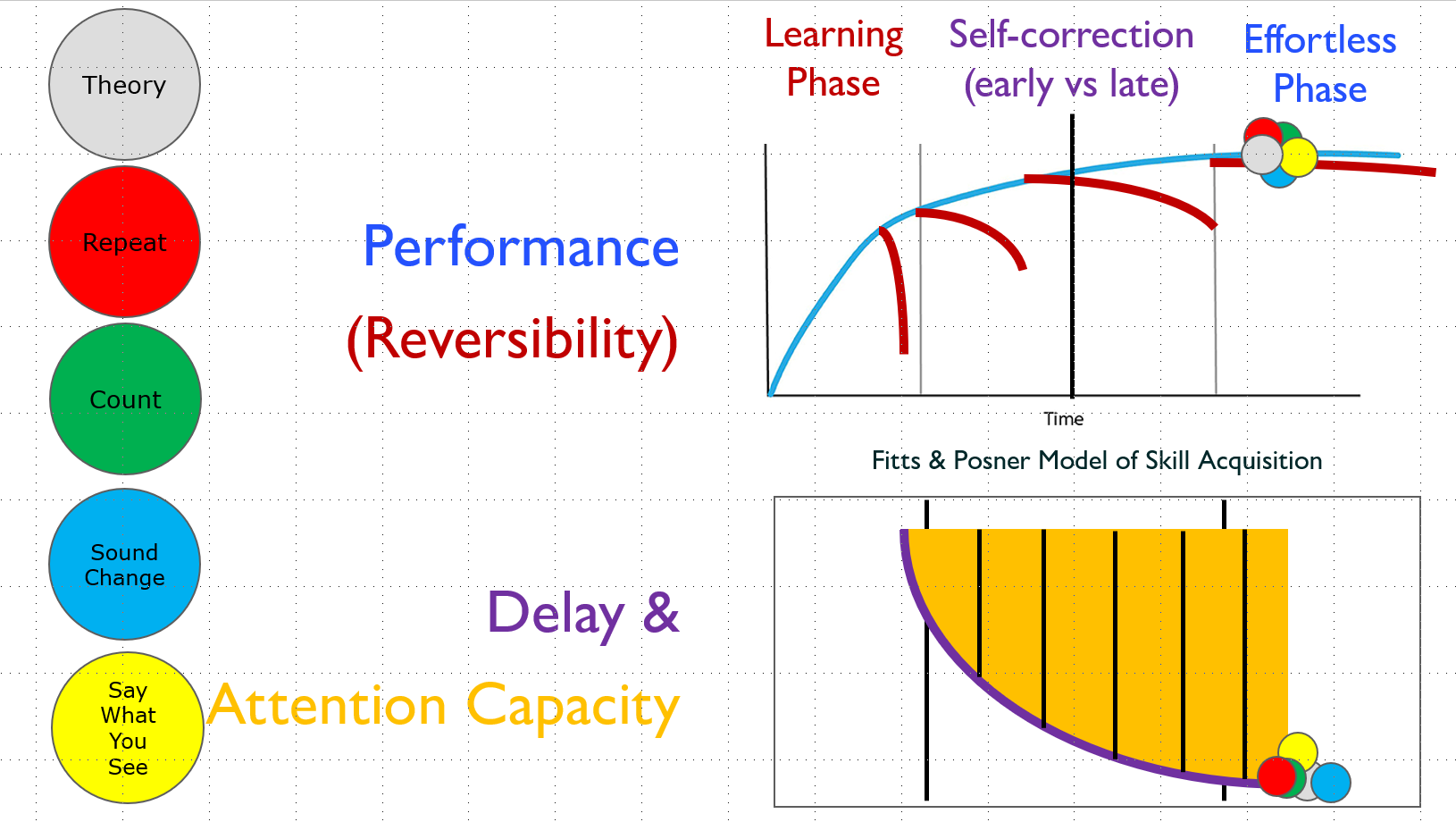
After 4× 1 hour sessions, I love seeing my clients get to this level!
Because multiple important things happen when your performance curve looks like this:
You have these skills forever: after battling with high volumes of questions, corrections, mass exercises, specific scenarios and high-stakes hostile scenarios… your brain has essentially permanently etched these skills into your neuroplasticity. How many years would it take you to forget how to hold a pen correctly? That’s how long you have these skills for.
It’s weird not to do it correctly: at this level of proficiency, you become extremely aware of when you deviate the slightest bit from a high standard of performance. But this hyper vigilant state doesn’t cause you to hesitate or self-sabotage anymore, it makes you hyper consistent. Wouldn’t it feel weird to write like a toddler by holding the pen in a fist grip? It’s the same for achieving these levels of public speaking skills… it’s weird not to be good.
Not the absence of nerves, the ability to regulate them instantly: attaining this level of skill doesn’t mean you’ll never be nervous or uncomfortable speaking again. The Amygdala and the Sympathetic Adreno-medullary System is an involuntary system (like your heart). It will involuntarily give you high heart rate, adrenaline, stress, panic when it detects threatening situations. However, in the face of a scary question by a scary person, you just need to muster a Repeat and your body will lock-in, focus on what is productive to answer the question well, regulate the distracting nervous energy, and start performing to a high standard on its own again.
Put it all together and it starts to look like this…
Scary Question: “Your house is on the line! Is this plan of yours viable or not, because if you’re wrong, you’re done!“
Sympathetic Adreno-medullary System: (panic! what do i do, what do I do, run, run)
You: Repeat: “Viable…” Count: “I’m going to tell you what I’m certain about, and what uncertainties we can manage…“
Sympathetic Adreno-medullary System: (Ohh yes, Repeat & Count. That’ll work, I’m good at that. Let’s Word Associate now… here are all the things I know about the project from most certain to least certain. Let’s use Sound Change to calm down and show gravitas, and use Say What You See to paint a clear picture of this secure aspect of the project.)